Svenborg Olsdotter – Between two countries (1852–1936)

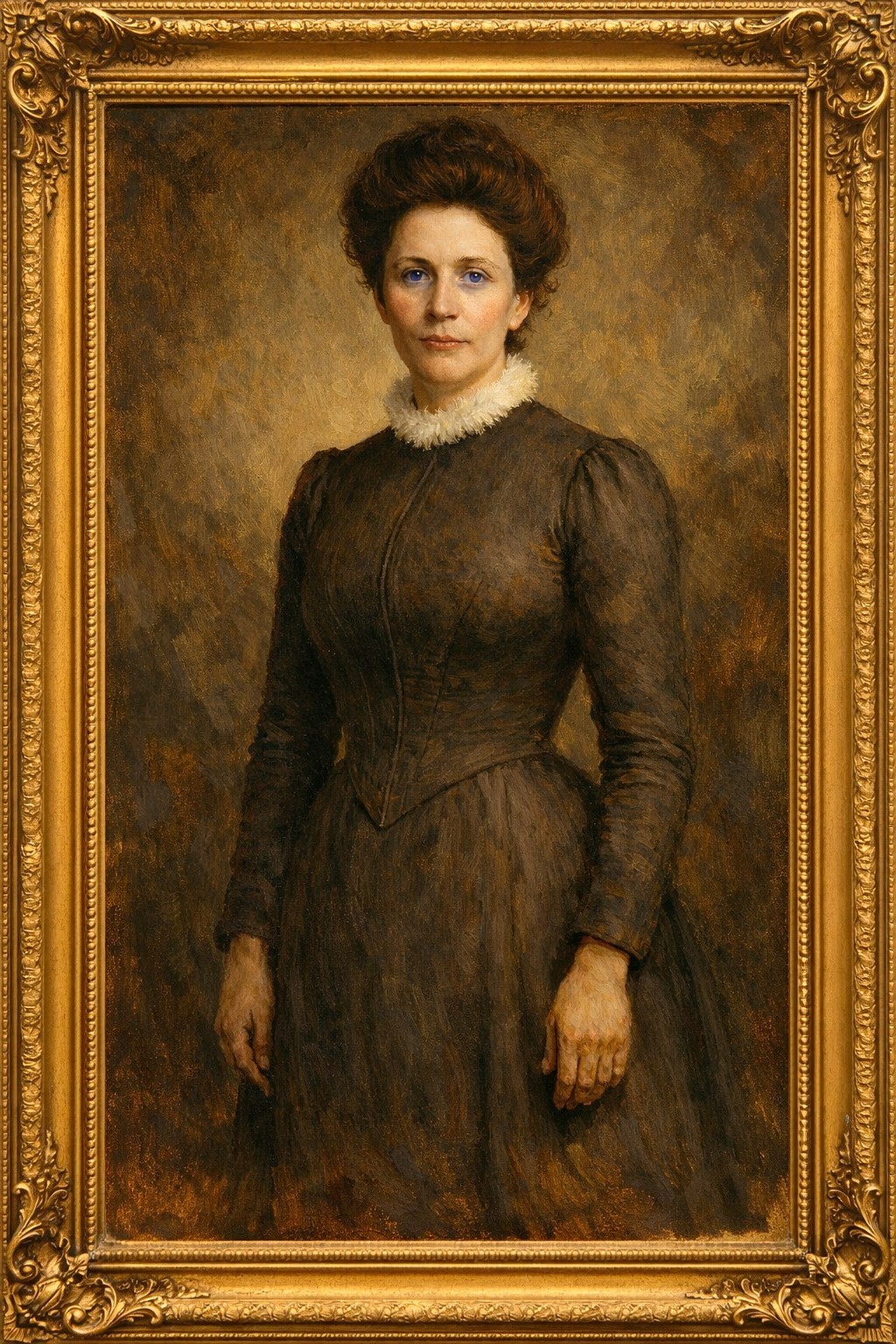
A Story of Swedish Immigration to Denmark in the Late 19th Century
A Story of Swedish Immigration to Denmark in the Late 19th Century
In the second half of the 19th century, thousands of poor Swedes from Blekinge, Skåne, and Småland crossed the strait to Denmark.
Many were young women seeking work as dairymaids, domestic servants, or dairy workers on Danish estates. They became an important part of the Danish rural working class, yet their lives have largely disappeared from history. Many were unmarried, without rights, and were often deported if they became pregnant or lost their employment.
One of these women was Svenborg Olsdotter,, born in 1852 in Blekinge. At the age of 27, she left Sweden to find work in Denmark and ended up fighting her way through a life that reflects both the harsh conditions of the time and the extraordinary survival instincts of one remarkable woman.
Svenborg arrived in Denmark in 1879 and found work at Valbygaard as a dairymaid. There she met Hans, and they fell in love.
Svenborg became pregnant, and naturally Hans and Svenborg wished to marry, but the parish council objected to the marriage. Instead, Svenborg was deported under the law of 1875, commonly known as the “Swedish Law” (“Svenskerloven”).
Svenborg gave birth to their daughter Hanna in Sweden, but later returned to Denmark, where she resumed living with Hans. In 1882, they had twin daughters, Olivia and Matilde.
In 1886, Svenborg was deported once again, and in 1888 she was permanently expelled from Denmark.
After this, Svenborg did not return to the Slagelse area, but settled in Nyhavn, where she lodged at Nyhavn 31.
It is fair to conclude that the so-called “Swedish Law” became fatal for Svenborg’s future, as she was forced to live more or less hidden in Denmark and found it difficult to obtain work.
For many years she was officially registered in Jämshög, Sweden, listed as having an “unknown residence.” This was because Sweden would have been responsible for supporting her if assistance became necessary.
But Svenborg learned the hard way how to deal with the system. She was a survivor, and the fact that she managed to endure suggests both intelligence and determination.
At the age of 70, Svenborg married a Finnish stoker who was 24 years younger than her. At long last, she became a respectable citizen, a position the system had denied her ever since she first arrived in Denmark.
Sadly, Svenborg’s fate was typical for many Swedish immigrants. What was unusual was how successfully she survived the system.
Briefly About the “Swedish Law”
The “Swedish Law” was the popular name for the Danish Law on the Supervision of Foreigners and Travellers from 1875.
The law was introduced to control the growing immigration of Swedish workers in the late 19th century.
It mainly concerned police supervision of foreigners and their ability to support themselves financially.
Key Points of the Law
Foreigners without lawful means of support or fixed residence could be expelled.
During the 1860s and 1870s, many Swedes came to Denmark, especially Copenhagen, seeking work.
Swedish workers were often viewed as a threat to Danish wages and working conditions.
The police were given increased authority to monitor foreigners and register those entering the country.
The purpose was to regulate immigration and reduce the risk of immigrants becoming dependent on poor relief.
Swedish workers were required to carry a special residence booklet proving their legal right to stay and work.
Unemployed Swedes could be deported.
Hundreds of foreigners were expelled from Denmark in the years following the law’s introduction.
The law is regarded as Denmark’s first real immigration law and marked a tightening of attitudes toward foreigners’ rights and social support.
Links
Links documenting Svenborg’s life
Svenborg Olsdotter
Forhutlede menneskeskæbner
Swedish Immigration
“The Swedes Are Coming” – The Forgotten Immigration